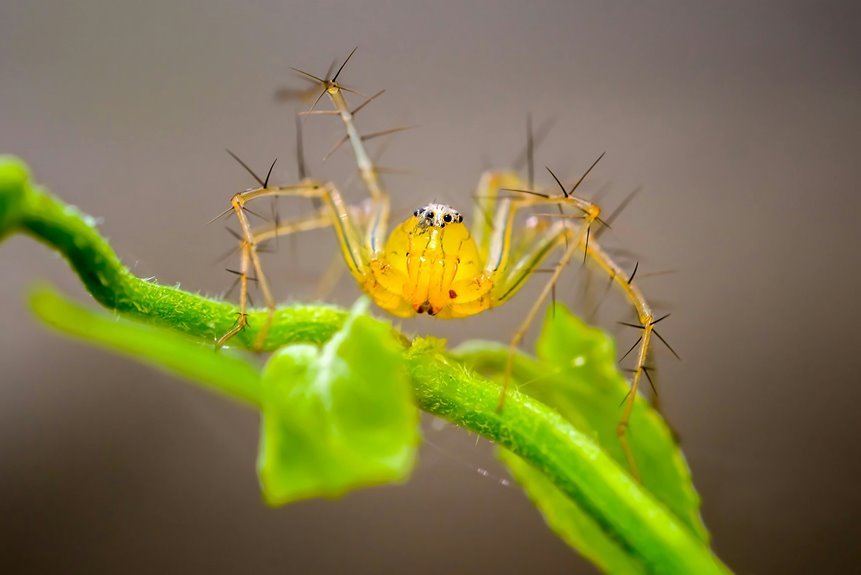
World’s Most Poisonous Spider
The Brazilian wandering spider, known for its highly toxic venom, occupies tropical regions of South America. Its hunting strategies vary, showcasing adaptability in capturing prey. While often feared for its potency, the spider’s venom holds potential for medical advancements. Understanding the ecological role it plays is essential for conservation efforts. However, misconceptions about its danger persist, prompting a closer examination of its true impact on both environment and human health. What lies beneath these myths?
Habitat and Distribution
The habitat and distribution of the world’s most poisonous spider, the Brazilian wandering spider (Phoneutria spp.), are critical factors that influence its ecological interactions and potential human encounters.
This species exhibits varied habitat preferences, thriving in tropical and subtropical regions across South America. Its extensive geographical range includes Brazil, Argentina, and Paraguay, enabling it to adapt to diverse environments and increase its encounters with humans.
Diet and Hunting Techniques
Habitat influences the dietary habits and hunting techniques of the Brazilian wandering spider.
This species exhibits diverse hunting strategies, primarily relying on ambush and active foraging. Its dietary preferences include insects, small vertebrates, and other arachnids, enabling adaptability to varying environments.
The spider’s effectiveness in capturing prey reflects its evolutionary specialization, optimizing survival and reproductive success within its ecological niche.
Venom: Facts and Myths
Although often sensationalized, the venom of the Brazilian wandering spider possesses distinct biological properties that merit scientific analysis.
Its venom composition includes a complex array of neurotoxins, debunking myths surrounding its lethality.
Contrary to associations with mythical creatures, the actual risks are nuanced, emphasizing the importance of understanding this spider’s venom for both medical research and public perception, rather than succumbing to exaggerated narratives.
Ecological Importance and Conservation
While often overlooked, the Brazilian wandering spider plays a vital role in its ecosystem, contributing to pest control and maintaining the balance of various trophic levels.
Conservation efforts aimed at preserving its habitat are essential, as these spiders fulfill crucial ecological roles. Protecting their environments not only safeguards this species but also promotes overall biodiversity and ecological stability in their native ecosystems.
Conclusion
In summary, the Brazilian wandering spider, with its venomous arsenal that could fell an elephant, plays a significant role in its ecosystem. Understanding its habitat, dietary habits, and the truths surrounding its venom dispels common misconceptions and fosters informed human interactions. As awareness grows, so too does the potential for conservation efforts, ensuring that this extraordinary arachnid continues to thrive in its native landscapes while minimizing the risks posed to human populations.